Christopher Nolan’s The Odyssey revives the ancient epic as a modern allegory with depictions of societal collapse and the end of the bronze age.
Originally published by Geese Magazine
Nolan’s Magnum Opus
What would we do—or sacrifice—to return home, and what do we lose along the way? The latest film from famed director Christopher Nolan, The Odyssey, covers the mythical Homeric tale of Odysseus and his tragic attempt to return home after the cataclysmic Trojan War. Nolan has achieved his magnum opus. The film is a physically breathtaking experience, shocking us with a spiraling timeline and cacophony of sound, score, and, at times, horrific imagery.
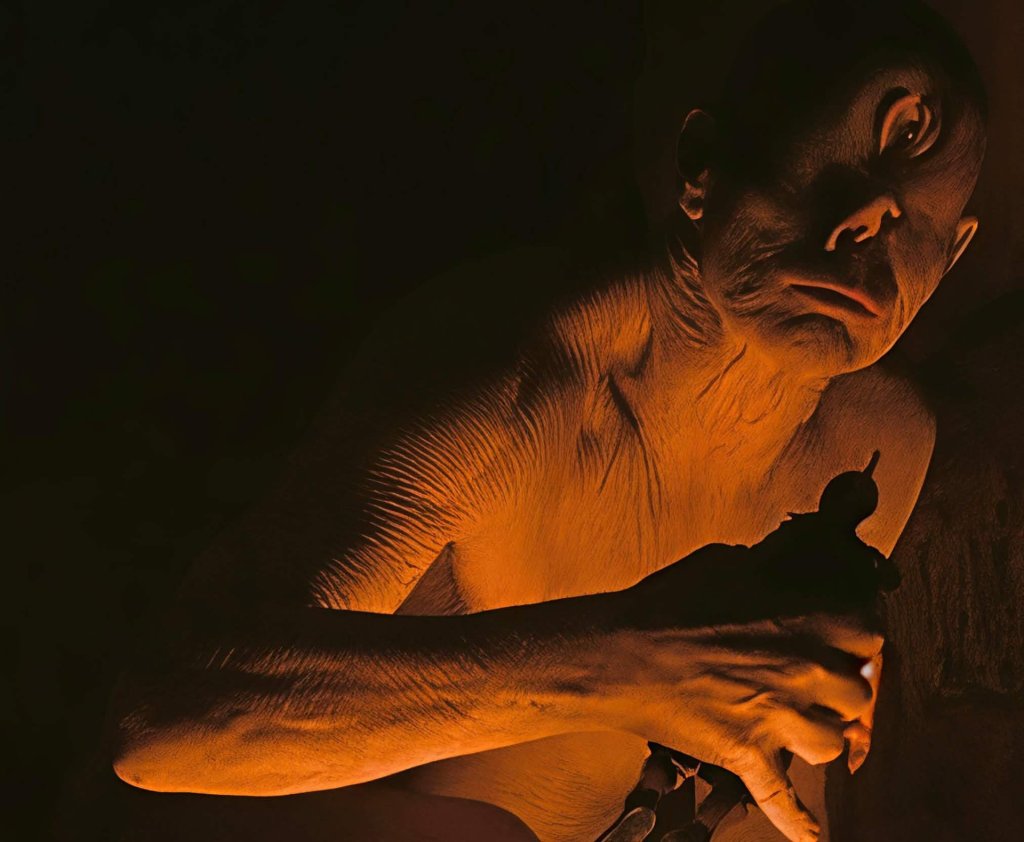
This movie is the culmination of decades of critically acclaimed work. In many ways, it is a spiritual successor to Oppenheimer and covers similar themes. What makes this movie so special in the canon of Nolan’s filmography, however, is that the dial for seemingly everything is turned up. The intense and often grueling use of physical locations such as Zeus’ Cave with a 60ft tall cyclops puppet, radical use of film and special effects technology to enhance that use of practical real-world locations, and a truly inspired twist on a classic tale result in a end-product that takes the best elements of Nolan’s and elevates them.
The cinematography of Hoyte van Hoytema is perhaps his best work to date, which includes such films as Oppenheimer, Nope, Tenet, Dunkirk, Spectre, and Interstellar. It may be pioneering, as well. The craftsmanship and ingenuity of the cinematography team involved developing a soundproof cage for the notoriously loud IMAX cameras and may be a catalyst for increased industry use of IMAX cameras in big studio films. Scenes of monsters and sorcery were pure, breathtaking horror. Storms that leave you shaking from fright. It is a mastery of the art form to create such vivid reactions.
However, the unique cinematography behind The Odyssey was also controversial. There are only 41 movie theaters in the world that can exhibit this particular IMAX format, making it hard for the general public to see the film in its intended form. In addition, there’s been a minority view that the return to physical rather than digital film is too traditionalist or a sign of elitism in the cinema industry. People have argued: why can’t that aspect ratio be in every movie screen, or what’s the point of this “formatslop?” Or more strikingly, “Poor people pay to see less.”
IMAX screenings, and especially IMAX 70mm, are a rarity and far more expensive than a regular movie showing. But this intense focus, not just from Nolan, on a return to film versus digital is a direct response to the alienation humans experience under capitalism, transposed to the film industry. Cinema is fundamentally a communal and human experience. We see countless hours of human labor and ingenuity embodied on screen to tell a story, to provide an emotional catharsis. Nolan’s insistence on IMAX 70mm—a format that emphasizes the physical and technical aspects of the craft—is both a resistance to digital and AI corporatization removing the human labor aspect at the same time that it is an expression of the very economic inequality he seems to critique. The format that makes the film feel most human and requires more human labor is also the one most audiences cannot access, either due to the scarcity of the format or increased cost.
For some time now, and especially with the recent rise of AI production, cinema has been moving further and further away from being a communal product of human labor and art to something utterly colorless, lifeless, and corporatized. Nolan and many other creators—and the below-the-line workers who make it possible—want a return of cinema to humanity. That’s why we are seeing a return to film on 35mm, 65mm, 70mm, and through IMAX, Panavision, Vistavision, etc.
The score from Ludwig Göransson, a regular collaborator with Nolan and Ryan Coogler, is not as iconic as his work in Sinners, for example, but it perfectly suits the film. His haunting orchestral sound adds just enough gravitas or fright appropriate for the scene. His use of the ancient aulos, a wind instrument, bronze gongs, and the lyre attempts to capture what Bronze Age music could sound like. The movie does not dominate, but it does elevate and enhance.
Another standout from the movie is the incredible acting from Odysseus (Matt Damon), Penelope (Anne Hathaway), Circe (Samantha Morton), Helen of Troy / Clytemnestra (Lupita Nyong’o), Antinous (Robert Pattinson), Eumaeus (John Leguizamo), Menelaus (Jon Bernthal), Athena (Zendaya), Eurylochus (Himesh Patel), Sinon (Elliot Page). Their performances ground this otherworldly and epic tale into a deeply human and tragic story.
There are some flaws. Telemachus (Tom Holland) is partially miscast, but is not horrible in the role. Certain of his line deliveries just fall flat, distracting from the immersion. Unfortunately, the 3-minute limit on filming scenes required by the particular IMAX cameras most likely hindered reshooting some of the scenes that would have in a different production.
Cinematic scope and the unrelenting pace of the film catapult you on a rollercoaster through myth and horror. When the credits roll, and you finally stumble your way out of the theater, you are exhausted. You feel every part of the film’s tragic journey. For this alone, Odyssey is worth the watch.
Nolan’s films straddle the line between blockbusters and high art. In 2004, he was originally attached to direct the historical epic, Troy. At the time, he had only directed two films and instead did a ‘film swap’ with Wolfgang Petersen for the Batman movies. Consequently, Nolan is in many ways responsible for the recent superhero movie boom and eventual glut, with his Batman trilogy being a box office smash and also critically acclaimed. Throughout his career, he has told stories about people trying to get home and the sacrifices. But in Odyssey, Nolan is probing at even bigger themes, through the same lens.
Nothing about the film is essentially new. It’s an adaptation of one of the oldest stories in human history, a story spoken and reinterpreted in songs around campfires for centuries before it was ever written down. The film beats are ones we remember from school when we had to read these stories for class. The acting, cinematography, score, and use of non-linear narratives are not individually unique. However, collectively, the movie reaches a height of artistic immersion—one where we all enter those campfires in the shadow of the great Bronze Age. Nolan taps into the primal narrative that the Homeric poets crafted and that lasted for millennia and repurposes it to not tell a story about a trickster hero, but a warning of how communal bonds breaking can lead to social collapse.
Ancient Greek Class Society, Imperial Blowback, and Collapse
A central aspect of the Homeric tale and Nolan’s adaptation is the blowback of the genocidal Trojan War. One of the first stops Odysseus and his crew make on their long 10-year journey home is to stop and rape and pillage coastal villages (and in the original Homeric tale, they kidnap women for slavery, and those women are never mentioned again).
This violence takes place after the complete destruction and genocide of Troy. In the film, Nolan uses the historically ambiguous origin of the Sea Peoples and the Bronze Age collapse to weave a story of the Trojan War as one of conflict over economic trade routes and territorial power. Ultimately, this war creates the Sea People and leads to the end of the Bronze Age. But this social shift is deeply tied into the story of morality. Odysseus’ crew continually violates “Zeus Law” (or Xenia) of hospitality. Their hubris and inhumanity mean they have to pay a tragic price.
The rise of US imperialism, genocides against Palestinians, Yemenis, Cubans, and other Indigenous peoples cause us to ask: is Nolan using Odyssey as a totem of that societal fear of collapse, one due to our inhumanity towards each other? The Odyssey comes, after all, on the heels of Oppenheimer, which, centered around the creation of nuclear weapons, carries an underlying similar theme of dread. Together, they form a narrative. If these great ‘civilizations’ can collapse in the blink of an eye, can we? Are we, just like Odysseus’ crew, on a path to create our own ‘Sea People’ that will bring our society to an end—wrought out of our own hubris? Odysseus is attempting to get home—but home is not a physical place, it is, for the hero, a time before the end of Troy and the end of their own humanity.
Homer’s Iliad and Odyssey, along with the other ‘Homeric’ poems that we know of, were finally written down around the 9th century BC when the Greek language was formalized. Contemporary archaeological and historical consensus on the site of Troy places the city as being attacked in 1250 BC and then completely destroyed around 1180-90 BC. This date coincides with the Bronze Age collapse, a period when the eastern Mediterranean went into a ‘Dark Age’ or the Early Iron Age starting in 1050 BC until around the 9th century BC. There was a decline of around half the population of Greece during this time. They lost the writing style of Linear B of Mycenaean culture and that era’s particular class structure.
So, from the time that the site of Troy was destroyed (and rebuilt over and over again for another 500 years) to the actual writing of the mythological tales surrounding it, is hundreds of years. The story of the Odyssey was orally composed and transferred across centuries, classes, and social structures before finally being written in an entirely different material and social environment. This means that the story is a reflection of when it is written, not just when it occurred. From examining the surviving text, scholars have observed a mismatch of social dynamics and ideologies due to the long game of telephone or social transference of the story over the years. A story that evolves for centuries will have characteristics of the class society of Bronze Age Greece and the early Archaic period.
This brings us to an interesting question regarding the movie: how much of the story is similarly affected by when it was produced? In Nolan, we have a director with modern capitalist class understandings and a Judeo-Christian social background that is reinterpreting this story, which is itself a mismatch of different pre-capitalist social dynamics.
In the movie, there isn’t an intense dissection of that class dynamic in the Odyssey. However, there is a mention of the geopolitical dynamics of the Bronze Age, which, as previously mentioned, is central to the theme of the story. International trade was the key to the social symbiosis of conflicting peoples in that area. Mycenaean society didn’t have money, but it developed an extremely centralized, hierarchical, and hereditary society. Commodity production, mass manufacturing in textiles with a merchant class, and middle-class farmers with hired and slave labor. The great palace complexes were the centers of trade and production where the monarch had authority over international trade and surplus redistribution. But it was fundamentally a barter system, so a development of money—or at least money did not develop by the time this class structure collapsed.
Production of copper and tin, the raw commodities needed for Bronze, was key to Greek society for millennia. The Greeks were on the semi-periphery of the larger West Asian and North African kingdoms, so they would import those raw materials, use factory slave labor to refine and produce finished goods to then trade back to the core and to extend trade from the British Isles to the Black Sea. Bronze Age societies were deeply interconnected and reliant on each other. That’s why Xenia (or Zeus’ Law in the film) was so crucial and extended to the conduct of states and people collectively, not just individual behavior.
In the time of the early Archaic, when the Odyssey was finally transferred to written text, the class dynamics of the Greek mainland were developing away from the centrality of heredity right to a society based around private property rights. G.E.M de Ste. Croix’s book on class in this society, The Class Struggle in Ancient Greece, argues that the “Age of the Tyrants” transitioned Greece away from hereditary rule.
Even from the Early Iron Age and post-Bronze era into the 6th century, we have the “hereditary ruling aristocrats” who are the “principal landowners” with “monopolized political power.” But within “a generation or two,” that hereditary aristocratic class is gone due to social revolutions that depose them and create societies based on “possession of property.” Greek society was deeply dynamic with intense periods of class struggle and conflict, which is reflected in the Homeric tales and their reinterpretation. Nolan doesn’t dwell on the dynamics of heredity rule or slave labor, though they are present in the film. As a result, they occupy an interesting position similar to how the Greek pantheon is clearly present in the text of the film, but are not active participants in the flesh and blood way in the Homeric story.
A key aspect of the movie, though not in the Homeric tales, is the infamous “Sea People,” one of historians’ favorite subjects. They are still shrouded in (some) mystery, and their impact on the collapse of Bronze Age societies is disputed. What is not disputed is that, over a short period of nearly 30 years, practically every major urban center in the Bronze Age world shows archaeological signs of destruction. There is still no conclusive answer on what happened.
Egypt documents two distinct invasions of “sea peoples” in 1207 BC and 1177 BC. As Dr. Patrick Wyman describes:
“The Mycenaean palaces had been destroyed. Hattusa, the Hittite capital, had been abandoned while the Hittite empire as a political unit covering Anatolia ceased to exist. The Elamites of Western Iran overran Babylonia, carrying off the sacred cult statue of Marduk and ending the Cassite dynasty that had ruled southern Mesopotamia for four centuries. Invaders destroyed city after city along the Mediterranean coast of Syria and even far inland. Egypt’s New Kingdom barely survived, fending off serious invasions from those same seaborne marauders, the infamous Sea Peoples. Assyria was clinging on by its fingernails, barely weathering a century of repeated disasters. As the individual states fell to pieces, so too did this whole interconnected system of long-distance trade, regular political contact, and easy mobility around a well-known world. This was the Bronze Age Collapse, one of the most extensive disasters to befall a series of complex societies in the historical and material record.”
Further, Dr. Wyman writes:
“It’s even possible that the most intense period of activity can be nailed down further, to roughly 1195 to 1177 BC. That’s just 18 years in which we can really say that the late Bronze Age world came to an end.” Interesting, there is linguistic and archeological evidence to support the theory that some scholars have that one of the groups of the Sea Peoples named by Egypt, the Peleset, would become the Philistines named in the Bible and ancestors to Indigenous Palestinians. And to support Nolan’s central twist that Odysseus and the Trojan War created the Sea Peoples, there is evidence to support the argument that some of the Sea Peoples come from the Aegean. The Sea People’s origin and cause are ultimately disputed due to a lack of concrete evidence, but Dr. Wyman argues that it could be the “beginning of a process of migration and not the end” and “maybe the Sea Peoples would have been the beginning of an Aegean diaspora. Over decades or even centuries of continuous contact and back-and-forth movement, the end result could have been a substantial transfer of people from one part of the Late Bronze Age world to another.”
Mycenaean society was also completely “dependent on grain imports from well beyond their immediate vicinity. If agricultural productivity dropped even a little bit, it would seriously strain the system’s ability to compensate.” If there is climate change, famine, epidemic, and these sorts of compounding social calamities, and the palaces were the center of food redistribution—how long before social unrest leads to class conflict from the demos or commoners (which was a multi-class term)? An interesting archeological observation is that cities in West Asia show evidence of warfare being at the center of these city-wide sackings, Troy included; but in mainland Greece, with the Mycenaean palaces, we have evidence of intense fire, but no bronze arrows or dead bodies. In addition, we have a written record of the Sea Peoples engaging in conflict with Egypt as previously mentioned. There is, however, no mention of the Sea People in the Mycenaean society.
Historian and archeologist Eric H. Kline states:
“to a certain extent at the end of the Late Bronze Age. It gets to the point where it’s also not only too complex, but too rigid. And so it’s not flexible enough to withstand any external stressors like fire or invaders or disease or drought…Mycenaeans, Minoans, Hittites, Canites, Cypriots, Egyptians, they are busy trading with each other for both raw materials and finished goods, which means, if you stop to think about it, they were not self-sufficient. And so, if one part of that machine had difficulties, then they all are.”
For example, Bronze is made from copper and tin. The vast majority of the raw materials were mined only in Cyprus and Afghanistan. Cyprus was a key node and geographically centrally situated in the Bronze Age world, but Afghanistan is far on the eastern periphery. If these big, complex, but class-rigid societies were not self-sufficient, it would only take one of these places to be cut off due to a variety of culminating factors for a systemic collapse.
New research shows climate change, droughts, and even the Plague were all factors as well in this collapse. Ultimately, the consensus is that, once the trade networks of Ancient Greece were compromised, the whole system went on life support. Mycenaean society was reliant on trade coming in for raw materials and goods. Once the ships stopped coming, the entire class structure disintegrated except for small local areas. The palaces were abandoned practically overnight. Whether the sacking of Troy, which was a key node of trade into West Asia and the Black Sea, created imperial blowback, the Sea Peoples, and the practical end of the societies of that era, is not supported in the archaeological or written record. Rather, it is a creative reappropriation of these aspects to weave a more contemporary-themed story. The film, like the poets and writers of the early Archaic, can’t help but infuse contemporary themes and concerns into the classic narrative.
The sacking of Troy, even in the movie, spirals around the entire narrative from the beginning to the end. We see evolving glimpses of it until we get the culmination. It’s the atomic bomb of the Bronze Age, and the visual parallels to Oppenheimer are undeniable.
In the film, Odysseus can’t stay home. He broke “Zeus Law” or Xenia by killing the suitors and, more importantly, by sacking Troy. He is destined to stay on the high seas going west, never to return home. In the original Homeric tale, that doesn’t happen, but the violence against the suitors is extended to extreme violence against the women slaves of Ithaca, showing that the cycles of extreme and often class violence that started the war never really went away in either the ‘original tale’ and Nolan’s reinterpretation of that story. By returning ‘home’ to a story he was supposed to adapt decades ago, Nolan is returning us to the story that is at the bedrock of Western culture, a story of how cyclical ruling class violence can upend all of society.
Nolan’s Odyssey is not a faithful adaptation; it’s a reinvention that transforms ancient epic into modern allegory. By centering the Trojan War’s genocidal aftermath and connecting it to the Bronze Age collapse, Nolan asks whether our own interconnected global society might suffer a similar fate. The IMAX 70mm spectacle is not mere grandiosity but an attempt to make audiences feel the scale of that historical vertigo. Whether the film succeeds as entertainment or warning for the future of society is up to personal preference; its insistence that we confront the costs of imperial violence is not. This is Nolan’s most politically engaged work, and perhaps his most necessary one. A blockbuster that asks us to consider whether we, like Odysseus, can ever truly go home, or whether home was lost the moment communal bonds are violently destroyed.


Leave a Reply